
Brawl Stars Freebies: Marketing Genius or Just a Scam?
Brawl Stars community debates Supercell’s “freebie” requiring 1788 gems, exposing pay-to-win gripes and the warped use of 'free'.
As someone who has logged way too many hours in Brawl Stars since its global launch, I’ve seen a lot of weird trends come and go. But nothing quite compares to the firestorm that erupted over a single Supercell post back in 2023—and honestly, the debate still simmers even now in 2026. The community lit up like a Christmas tree when the official account labeled an in-game offer as a “FREEBIE,” except grabbing it required you to fork over 1788 gems first. Yeah, you read that right. Free, but only if you already paid. My first reaction? A solid facepalm. 🤦♂️
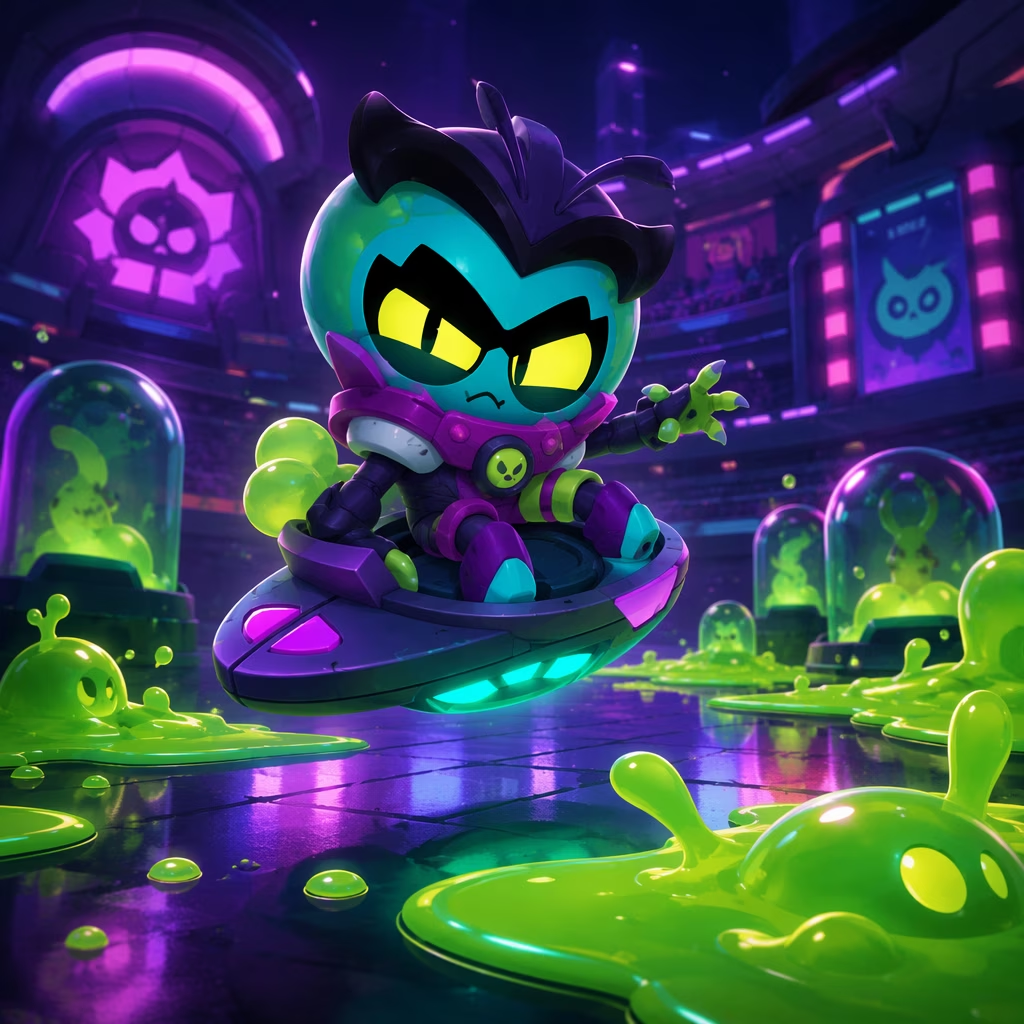
The whole thing kicked off when a Redditor, MacInTosh1996, threw gasoline on the topic with a post questioning whether these so-called freebies were just cunning marketing camouflage. And man, did people have opinions. I jumped into that thread expecting a quick vent session, but what I found was a full-blown philosophical dissection of in-game monetization. It’s the kind of conversation that makes you realize how much the word “free” has been twisted in mobile gaming.
🧐 The Word “FREE” Next to a Lock Icon Is Just Comedy Gold
One of the first things that struck me—and a lot of other players—is the sheer absurdity of seeing FREE plastered right next to a tiny padlock. It’s like walking into a car dealership and seeing a sign that says “FREE CAR (with purchase of a $50,000 SUV).” You can’t help but laugh. I remember one commenter dryly pointing out that Supercell has perfected the art of making you feel like you’re getting a treat while your wallet quietly weeps. Another user really nailed it: “Why couldn’t they just name those ‘Bonus’? It feels way less like a scam and more like a nice treat for all the playtime.” And honestly? That simple swap would probably erase half the saltiness. Calling it a bonus reframes the entire exchange—you’re getting a little extra for your commitment, not being tricked into thinking you stumbled upon a gift.
💸 Pay-to-Win Worries Creep Into Every Corner
The “freebie” drama isn’t just semantics; it’s a smoke signal for deeper frustrations about pay-to-win mechanics that have haunted Brawl Stars for years. When a game starts slapping a “free” label on items locked behind a heavy gem purchase, it feels like a jab at casual players who grind for every coin. One Redditor bluntly said, “It’s a freebie, for P2W players,” and that line still echoes around the subreddit in 2026. There’s this creeping feeling that your skill won’t matter if someone can just buy their way to exclusive skins, pins, and even brawler advantages. I get it—I’ve been on both sides. I’ve dropped some cash on a few seasons, but watching a so-called freebie dangle just out of reach because I didn’t buy the latest mega pack? That stings. The community’s trust erodes when “free” becomes code for “you already spent enough to deserve this.” And you know what’s scarier? New players might not even notice the manipulation until they’re hooked.
😂 The Humor That Keeps Us Sane
But here’s the thing that makes this community amazing: we meme our way through the pain. The thread wasn’t just a salt mine—it was a comedy club. Players were tossing around phrases like “Scamcell moment” and crafting elaborate jokes about how the lock icon is now the real MVP. The ability to laugh at the absurdity of it all is a coping mechanism, sure, but it also builds solidarity. I’ve chuckled more than once at fan-made images of Brawlers holding up signs that say “FREE (conditions apply).” That shared irony turns frustration into a bonding experience. It’s like we’re all in on the same inside joke—Supercell’s marketing team might think they’re clever, but we see right through it, and we’re not afraid to roast them a little.
🌟 But Wait, Some Players Actually Love These “Freebies”
Let’s not pretend there isn’t a flip side. For a chunk of the player base, these locked-away cosmetic items are a major flex. I’ve talked to folks in my club who proudly show off that one exclusive pin they got from a “freebie” that cost 1788 gems. To them, it’s not about being tricked—it’s about flaunting dedication and, yes, financial commitment. In a world where digital bling can carry as much social weight as a rare championship badge, owning that pin says, “I was here, I supported the game, and I look good doing it.” It’s a weird status symbol ecosystem, but it’s real. I’ve caught myself eyeing a limited-time spray thinking, “I mean, it’s basically free if I buy the pass…” and then I stop, laugh at myself, and remember the whole reason we had this debate in the first place. The psychology is sneaky, and even knowing the trick doesn’t always make you immune.
🔄 So Where Are We in 2026?
Three years after that Reddit post exploded, the “freebie” terminology hasn’t changed much in Brawl Stars. Supercell still uses it, and the community still rolls its collective eyes every time. What has evolved is the overall awareness. Players are quicker to call out disingenuous wording, and I see more people pushing for transparent labels. Content creators regularly dissect new offers with a critical lens, pointing out when “free” really means “bonus.” The conversation has bled into other games, too—now whenever a mobile title pulls a similar stunt, someone references the Brawl Stars freebie fiasco. It’s become a case study in video game marketing ethics.
Ultimately, I don’t think the debate will ever die completely. As long as free-to-play games exist, there will be tension between monetization and player trust. But I’m glad we talk about it. I’m glad we laugh about it. It means we’re paying attention, and in a gaming landscape that’s increasingly built on microtransactions, that’s a win in itself. So next time you see that lock symbol next to the word FREE, just remember: you’re not alone in side-eyeing your screen. 😉
Insights are sourced from Sensor Tower, and they help frame why “FREEBIE” labels tied to high gem spend can be so effective: mobile monetization often leans on perceived value boosts (like “bonus” items) to increase conversion without lowering the sticker price. Read through the Brawl Stars “freebie” uproar in that light, and the lock-icon irony becomes less of a joke and more of a textbook example of how storefront phrasing, time limits, and gated rewards can nudge players toward purchases while still feeling like they’re getting something “extra.”