
Brawl Stars World Finals 2025: When 1.1 Million Became 211K
Brawl Stars World Finals 2025 suffered a 90% viewership collapse as fans ditched the solo esports event lacking 2024's multi-title festival vibe.
Picture this: a roaring arena, flashing lights, and the collective heartbeat of a global esports community. Now picture the same scene a year later, but the echo is a little louder, and the crowd is... well, a lot smaller. The Brawl Stars World Finals 2025 at DreamHack Stockholm was the esports equivalent of a blockbuster sequel that forgot to invite the fans. After a blockbuster 2024 where Supercell crammed three of its titans—Brawl Stars, Clash Royale, and Clash of Clans—into one massive spectacle in Helsinki, the 2025 edition went solo. And the numbers? They took a nosedive worthy of a Bull charging off a cliff. ✨
According to estadísticas from Esports Charts, the peak concurrent viewership plummeted from a staggering 1.1 million in 2024 to just 211,000 in 2025. That’s a 90% drop, folks. Not a typo. If last year’s audience was a stadium rock concert, this year’s was more of an intimate jazz café—except even the café might have had more people. Average viewership mirrored the collapse, skidding from 639,209 to a modest 119,035. The broadcast stretched almost twice as long, but instead of building anticipation, it seemed to encourage viewers to nap, do laundry, or only tune in for the spiciest brawls. Selective watching became the name of the game.
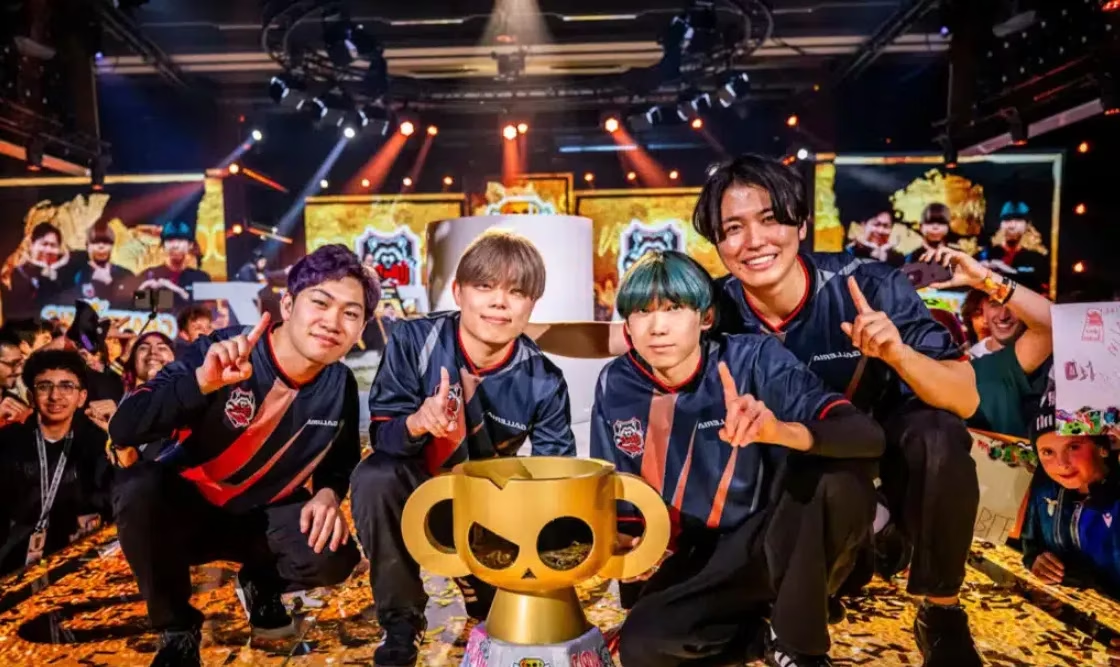
So what turned the hype train into a ghost train? Analysts pointed to a lack of synergy with other Supercell titles. In 2024, fans of three franchises were glued to one screen; in 2025, Clash and Clans stayed home, and Brawl Stars had to carry the show alone. The change of venue from Helsinki’s convention center to Stockholm also didn’t help—some fans couldn't make the trip, and the remote vibe just didn’t match the festival-like atmosphere of the previous year. It’s hard to blame the teams, though. The top rosters still pulled their weight in viewership spikes. Crazy Raccoon, the Japanese powerhouse, clawed into the top three most-watched participants, joined by familiar names like SK Gaming, HMBLE Team, and Revenant XSpark. Fans clearly still love a good underdog story and close-quarters combat; matches with intense back-and-forth action drew significantly more eyeballs than one-sided slaughters.
And oh, those slaughters. The playoff bracket had all the tension of a friendly picnic. Six out of eight series ended in brutal 3-0 sweeps, which made the knockout stage feel more like a formality than a fight for survival. Only two nail-biters went all the way to a decisive fifth map, and those instantly topped the viewership charts. It’s a timeless truth: audiences adore uncertainty. A favorite dismantling a weaker opponent with surgical precision might be impressive, but it’s about as entertaining as watching paint dry compared to a miraculous comeback.
Language demographics painted a diverse global picture. English and Spanish streams each gathered roughly 50,000 peak viewers, Portuguese pulled in nearly 40,000, and Japanese broadcasts clocked 35,506. The final itself, however, was a landslide—Crazy Raccoon steamrolled Italy’s HMBLE in a poetic rematch of the 2024 finale, where the Italians had triumphed. This time, the Japanese squad grabbed the championship trophy and a sweet 40% of the $1 million prize pool (around £754,330). Sweet revenge and a fat wallet—what’s not to like?
A curious twist emerged in the platform wars. YouTube absolutely snatched the throne with a peak of 147,974 viewers, leaving Twitch in the dust by over 90,000. In 2024, the roles were flipped: Twitch had lorded over with 900k+. This shift suggests the Brawl Stars esports caravan is slowly migrating toward Google’s video kingdom—perhaps thanks to better mobile playback, smarter recommendation algorithms, or just the fact that everyone already has YouTube pre-installed on their phones. 📱
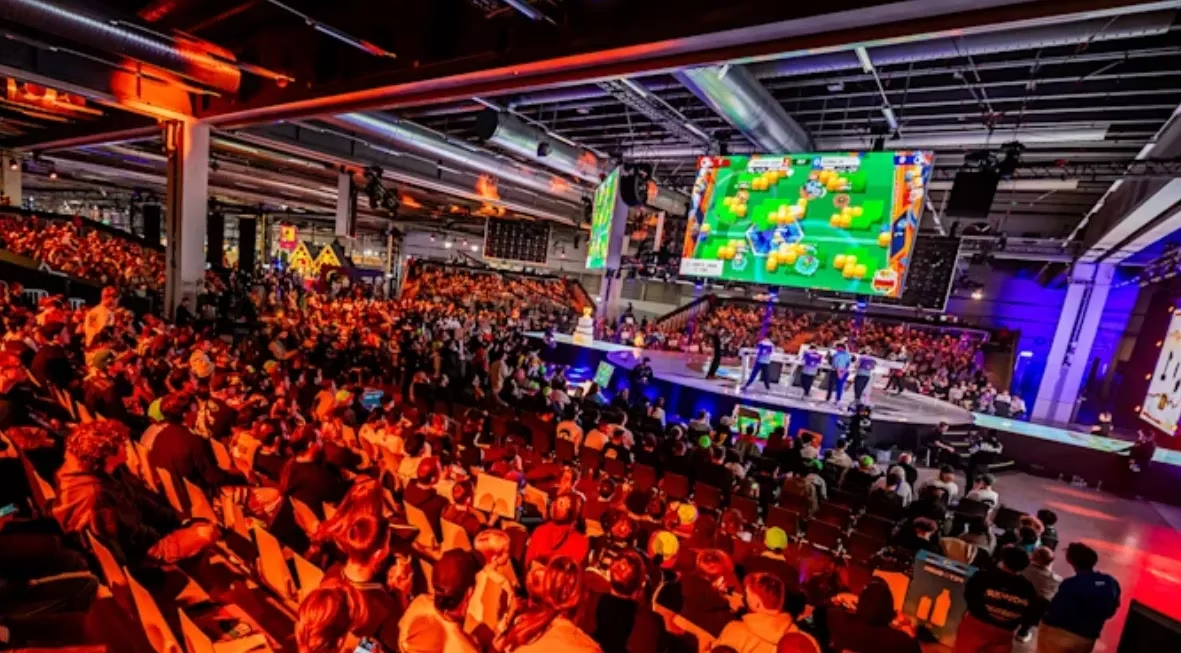
Supercell, ever the optimist, rolled out an upgraded match prediction system directly on the official event site. Fans could log in via Supercell ID, analyze team statistics, and drop predictions for every match. Rewards were as generous as a piñata at a birthday party: 10,000 gems for guessing all 27 matches correctly, plus Pro Pass XP, Star Points, exclusive viewing badges, and even Waffle items and a hygiene box (yes, a hygiene box—because clean brawlers are happy brawlers). The MVP voting mechanic added another layer of interactivity, letting fans earn extra rating points by voting for standout players. Even if your predictions were trash, simply participating still handed out goodies. Free stuff always softens the blow of a wrong guess.
Now, as we navigate 2026, the echoes of that lukewarm 2025 final are still ringing. Supercell finds itself at a crossroads. The dip in viewership was a reality check, but it also showcased the unwavering loyalty of a core fanbase that still goes wild for Crazy Raccoon-style dominance and last-map deciders. Rumors are swirling that 2026 will see a return to the mega-event format—a single colossal weekend where Brawl Stars shares the spotlight with its sibling games, potentially inflating hypes once again. An expanded prediction system with even juicier bonuses and long-term engagement tools is also in the cards. The DreamHack Stockholm experiment, for all its hiccups, proved that the game’s competitive soul remains intact; top-tier play still delivers heart-stopping moments. Mobile esports isn’t going anywhere, and Brawl Stars continues to be a heavyweight. If Supercell plays its cards right, 2026 could be the year the million-strong crowd comes roaring back—and this time, maybe the playoffs won’t put everyone to sleep before the final map. 🎮