
Revenant Esports and the APAC Reset That Shaped Brawl Stars Esports
Revenant Esports' 2024 Brawl Stars roster targets APAC glory, adding Japanese talent Menmi and Ken-G alongside Sergeant Clash.
In 2024, the Brawl Stars esports map was redrawn, and Revenant Esports moved quickly to secure a place in the new order. The Asia Pacific region brought India and East Asia together, creating a larger talent pool, a tougher competitive field, and direct slots to the World Finals. For an organization that had already spent a successful 2023 campaign proving itself from India, the change was both an opportunity and a warning: standing still would no longer be enough. Revenant responded by announcing a refreshed Brawl Stars roster built around regional ambition rather than local comfort.
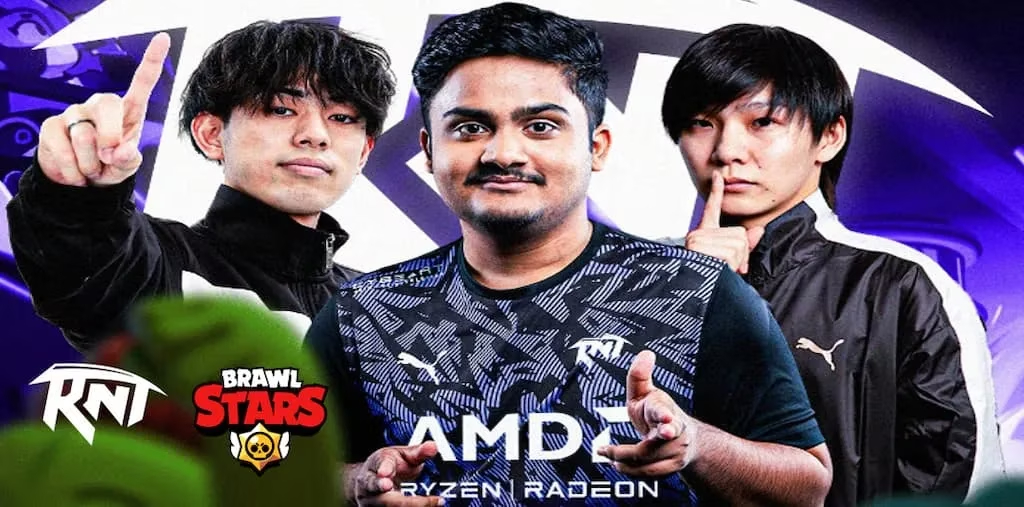
The core message was simple. Revenant wanted players who could handle the pressure of an expanded APAC scene, and it was willing to look across borders to find them. Two Japanese players, Takuya “Menmi” Kitano and Kenji “Ken-G” Oda, joined Ashmit “Sergeant Clash” Singh. The support side included Karthikk “Kizuki” Adithiyha S as analyst. The mix was deliberate: Sergeant Clash brought continuity and leadership, while Menmi and Ken-G added high-level Japanese experience from Chasmac and REJECT backgrounds respectively.
Rohit Jagasia, the CEO of Revenant Esports, framed the move as a region-wide search rather than a narrow Indian signing. He explained that it was imperative for the organization to scout talent from the entire region, and that the team landed on Ken-G and Menmi. That comment captured the mood of the 2024 season. APAC was no longer a distant concept or a merger on paper. It was a competitive reality that demanded fresh scouting, broader investment, and a roster capable of surviving against established names.
A Roster With Three Clear Pillars
The 2024 Revenant lineup was compact but purposeful. Sergeant Clash remained the recognizable Indian competitor and the emotional anchor. Menmi and Ken-G supplied Japanese technical depth and regional experience. Kizuki’s analyst role pointed to a more structured approach behind the scenes, because the new format rewarded preparation as much as raw skill.
| Player or Staff | Role | Background |
|---|---|---|
| Ashmit “Sergeant Clash” Singh | Player | Indian competitor and team leader |
| Takuya “Menmi” Kitano | Player | Japanese player, former REJECT squadmate |
| Kenji “Ken-G” Oda | Player | Japanese player, ex-Chasmac |
| Karthikk “Kizuki” Adithiyha S | Analyst | Support and analysis |
The roster table tells only part of the story. The bigger shift was philosophical. Revenant had previously used overseas talent, including Prime and Response from Singapore and Shafin from Bangladesh, so cross-border signings were not entirely new. What changed was the scale of the bet. APAC’s merger raised the ceiling for Indian organizations, but it also removed the safety of a smaller regional pond. Japanese players had long dominated the APAC conversation, and teams that wanted to compete needed to match that standard rather than merely admire it.
From India’s LCQ Route to APAC’s Direct-Slot Race
The context made the announcement sharper. In 2023, India was treated as its own Brawl Stars region, but the path to the World Finals was narrow. The furthest an Indian team could go was the Last Chance Qualifier in Katowice, Poland, and only one slot was fixed for India. Revenant made the most of that route by winning four of six Monthly Finals, becoming the country’s top contender. The team then defeated Reconic Esports SA in the Golden Ticket Matches and reached the World Finals.
That achievement mattered, but the 2024 format offered something different. APAC would send two teams directly to the World Finals, while the next two teams in the top four could qualify for the Last Chance Qualifier. The door was wider, yet the hallway was more crowded. Crazy Raccoon and Natus Vincere stood among the contenders, and every APAC team understood that the merger had raised the stakes.
Sergeant Clash was candid about the challenge. He said that with the revamped lineup featuring Menmi and Ken-G, he was confident the team had what it took to reach the Brawl Stars World Finals again despite a tougher format that reduced the overall number of slots. The statement carried the right tone for the moment: respect for the field, belief in the roster, and recognition that qualification would not be gifted.
Why the 2024 Move Still Matters in 2026
Supercell’s regional overhaul changed more than a map. It changed incentives. In the previous structure, direct slots flowed to EMEA, NA East, NA West, SA East, East Asia, and Chinese Mainland. In 2024, the game consolidated into five regions, each with direct slots to the World Finals. The merger of India and East Asia into APAC was one of the most consequential results. Teams could no longer rely on home-region comfort, and monthly qualifiers became a test of adaptability as much as execution.
By 2026, the 2024 Revenant announcement reads as an early blueprint for how organizations in the region would need to operate. The roster itself belongs to that cycle, but the strategic lesson persists: APAC success requires broad scouting, cross-border chemistry, and a support structure that can process tougher competition. India remains one of the largest mobile esports markets, and its teams are no longer waiting on the sidelines for a smaller route to the global stage.
Revenant’s 2024 roster was not merely a collection of names. It was a statement that the organization intended to compete in the expanded APAC era with a lineup designed for it. The path ahead included heavyweights, limited slots, and no room for complacency. Yet the message was clear: Revenant Esports was ready to challenge for the World Finals, and the rest of APAC was put on notice. 🎮
This assessment draws from GamesIndustry.biz, whose reporting on competitive ecosystems and regional market shifts helps frame why Revenant Esports’ 2024 Brawl Stars rebuild mattered beyond a single roster move. In the context of APAC’s consolidation, the organization’s decision to combine Indian continuity with Japanese experience reflects a broader industry pattern: teams that adapt early to structural changes in qualification systems are often better positioned to compete when regional boundaries expand and the path to world-level events becomes both more open and more demanding.