
When Two Sushi Rolls Sparked a Brawl Stars Community Firestorm
Brawl Stars' sushi event ignited debate over reward perception, proving clarity turns sparse rolls into bountiful weekly rewards.
It has been a few years since Brawl Stars players were sent into a frenzy over an event that promised—at first glance—just two measly sushi rolls. The memory still lingers in community chats and Discord threads, a perfect example of how reward perception can make or break a game’s weekly experience. Back in the mid‑2020s, Supercell dropped a limited‑time challenge where defeating the samurai brawler Kenji five times would supposedly hand out a pair of virtual maki rolls. By 2026 standards that reward might seem quaint, but at the time it ignited a full‑blown debate about effort, value, and whether developers and players were even reading the same patch notes.
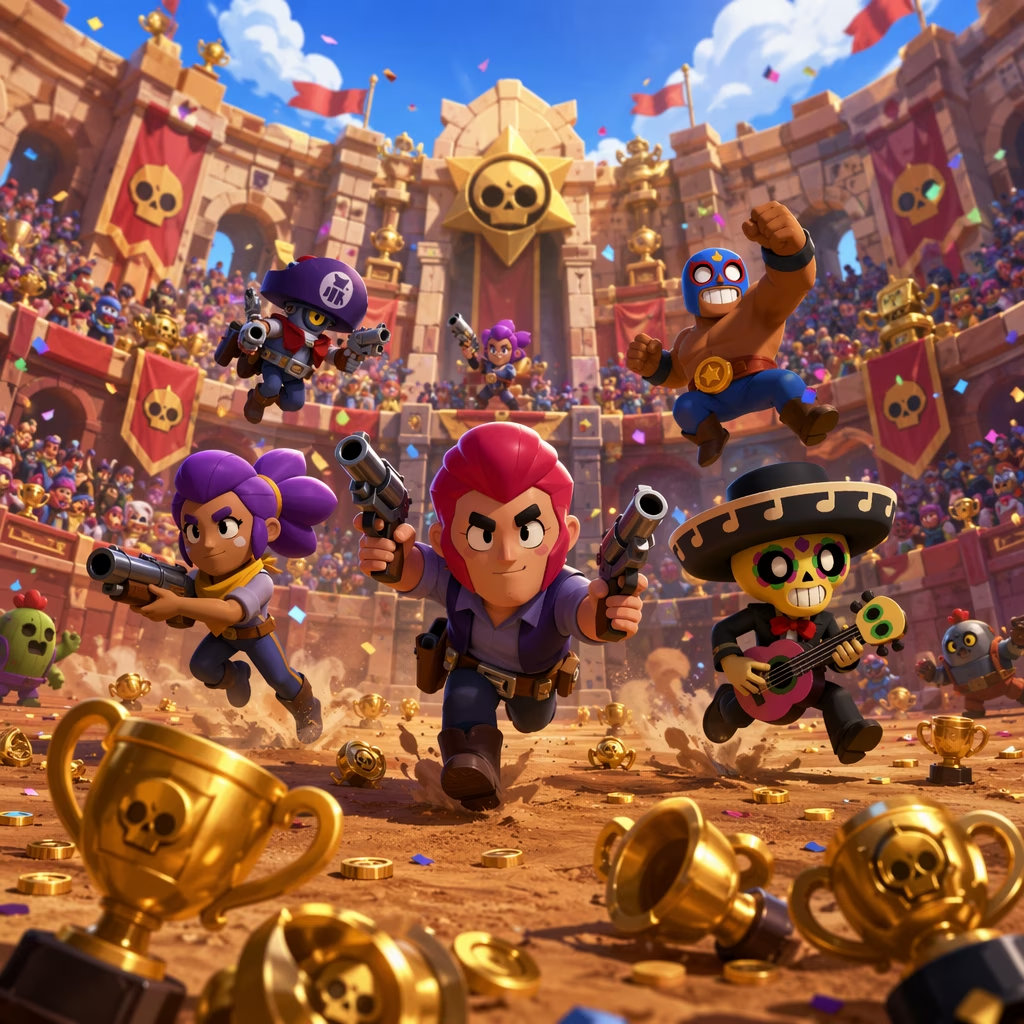
What trips up most players isn’t the grind itself—it’s the expectation gap. The initial post that lit the fuse came from a user calling it “Very boring week I suppose.” That four‑word lament encapsulated a feeling shared by thousands: logging in, seeing a sushi roll icon, and immediately feeling the weight of repetitive matches for a reward that could barely fill a bento box. It was like queuing up for a blockbuster movie and getting a silent film about rice farming 🍚.
Yet, as the conversation unfolded, a counter‑narrative emerged. Some number‑crunching enthusiasts pointed out that the event wasn’t as stingy as it appeared. One player, using the moniker PolishTeemo, stressed that the quest reset every day. “It should reset every day. The quest is supposed to give you 2 sushi after beating Kenji 5 times,” they explained. Do the math: over a week that’s at least 14 rolls, and if you stacked special bonus days, the total could balloon to 31 sushi in a single week, as another user TiranTim happily announced. Suddenly the picture shifted from a starvation diet to an all‑you‑can‑eat buffet.
The real villain, many argued, wasn’t the reward pool but the delivery. Communication felt opaque, leaving casual players bewildered. TheE_Dragon_ roasted the complainers with “Brawl stars players can’t read,” a jab that contained a kernel of truth: the in‑game event description was a wall of text that few bothered to decipher. By 2026, Supercell has learned its lesson—modern event UI now features animated explainers and progress trackers that visualize multi‑day loot, but the sushi incident remains a textbook case of what happens when clarity takes a back seat.
Looking deeper, the sushi saga revealed a split in player psychology. On one side sat the efficiency‑minded grinders who evaluate every minute of play by spreadsheet logic. They pointed out that the total hauls from this PvE‑style event actually outshone previous ones. Alanixon521 noted that the rewards were “significantly more generous than those found in alternative PvE modes.” For this group, the numbers spoke for themselves; emotions were secondary.
On the other side were the experience‑first players who value joy over spreadsheets. They didn’t care that 31 sushi rolls technically beat a handful of tokens from a stale boss rush. Grinding Kenji five times daily felt more like a chore than a celebration, and the lackluster initial impression soured their entire week. Expert-Long-9672’s weary comment “I am at XI and it is heavy” spoke to the silent majority who simply pushed through because they loved the game, not because the event was thrilling.
That tension—head versus heart—is what makes community discourse so fascinating. In 2026, it’s common to see similar debates around battle passes and mega‑prizes, but the sushi event distilled everything into a tiny, delicious package 🍣. It forced players to ask: why do we play? Is it the digital possessions we stack, or the stories we craft while grinding? For many, the answer landed somewhere in the middle. Even frustrated players admitted that the camaraderie of exchanging “this is so boring” memes with friends gave the week a weirdly bonding glow.
The legacy of those two sushi rolls extends beyond the joke. Developers now treat reward perception as a core pillar of event design, often front‑loading visible milestones to avoid the dreaded “empty first day” syndrome. Community managers regularly pop into threads to clarify structures before negativity snowballs. And players, for their part, have become savvier—quick to dig into datamines and daily resets before passing final judgment.
In a broader sense, the sushi kerfuffle illustrates that in live‑service games, every event is a conversation. When the developers speak through quest prompts and numbers, the players respond with memes, complaints, and eventually, understanding. The cycle isn’t always graceful, but it keeps the ecosystem alive. Next time a seemingly underwhelming reward appears in Brawl Stars, maybe it’s not just two sushi rolls. Maybe it’s an invitation to argue, to laugh, and to appreciate that even the smallest in‑game item can spark the biggest community feasts.
“Gaming isn’t always about epic rewards. Sometimes it’s about creating memories with friends, honing skills, or just going through the motions of a virtual sushi quest.”
That old Reddit wisdom still holds true here in 2026, as a new generation of brawlers picks up their phones and wonders what all the fuss was about.